
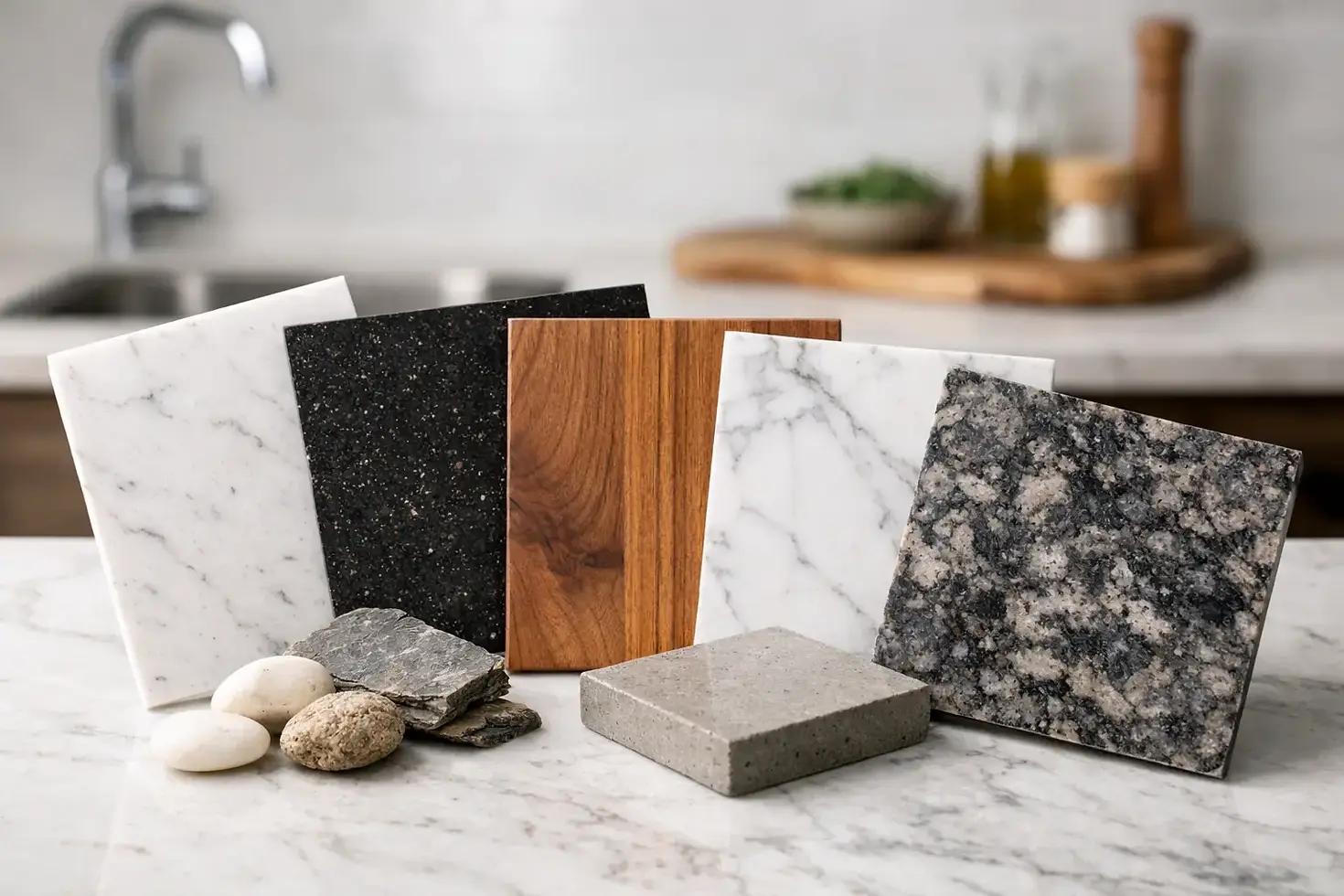
Best Materials for Kitchen Countertops, Compared
A countertop is where the kitchen earns its keep. It absorbs hot pans, knife slips, grocery bags, splashes, homework, and the occasional rushed breakfast. The best materials for kitchen countertops are not simply the most dramatic-looking surfaces in a showroom. They are the ones that suit how your household actually cooks, cleans, entertains, and lives.
For a high-investment renovation, choosing the right countertop also protects the overall design. Cabinet color, lighting, backsplash, appliance placement, and even smart-home details should work with the surface rather than compete against it. The goal is a kitchen that looks considered on day one and remains comfortable to use years later.
How to Choose the Best Materials for Kitchen Countertops
Start with the practical questions. Do you cook daily or mainly reheat meals? Do you want a pale, polished surface, or would you rather have a forgiving material that hides crumbs and water marks? Will children use the island for crafts and snacks? Is regular sealing a reasonable part of your home-care routine?
Then consider the visual role of the countertop. A large island can become the focal point of an open-plan home, so a material with distinctive movement may be worth the investment. In a smaller kitchen, a quieter surface can make cabinetry, lighting, and hardware feel more balanced.
There is no single perfect option. Every material involves a trade-off among durability, maintenance, appearance, cost, and repairability. A professional design plan helps resolve these choices before fabrication begins, when changes are still manageable rather than expensive.
Quartz: Reliable Style for Busy Kitchens
Engineered quartz remains one of the most popular choices for homeowners who want a polished look with low day-to-day maintenance. Made from natural quartz particles and resin binders, it is nonporous, resistant to staining, and available in a wide range of colors and patterns, including marble-inspired designs.
Quartz is especially well suited to busy households. Spills from coffee, sauces, and cooking oils can usually be cleaned with mild soap and water, and the surface does not require routine sealing. Its consistent appearance also makes it easier to achieve a controlled, contemporary kitchen design.
The key limitation is heat. Quartz can be damaged by a very hot pot or pan placed directly on the surface, so trivets are essential. It can also discolor with prolonged exposure to intense sunlight, which matters in kitchens with strong natural light. Select a fabricator and installer carefully, as visible seams and poor edge work can undermine an otherwise premium result.
Natural Stone: Character That Cannot Be Repeated
Natural stone brings depth, variation, and a sense of permanence that manufactured materials often cannot fully replicate. Marble, granite, quartzite, and soapstone each have a distinct personality, and each asks something different of the homeowner.
Marble for a Refined, Lived-In Look
Marble is prized for its veining and soft luminosity. It can make a kitchen feel elegant without looking overly formal, particularly when paired with warm wood, brushed metal, or understated cabinetry. However, marble is porous and relatively soft. Acidic ingredients such as lemon juice, vinegar, and wine can etch the finish, while heavy use may leave small scratches or stains.
For homeowners who appreciate patina, these marks become part of marble's appeal. For those who expect a spotless, uniform countertop, marble may create unnecessary stress. It works beautifully in lower-impact areas, such as a baking station or coffee bar, or in kitchens where careful maintenance is welcome.
Granite for Natural Durability
Granite is harder and generally more resistant to heat and scratching than marble. Its natural patterns range from subtle to bold, allowing it to suit traditional, transitional, and modern interiors. Most granite needs periodic sealing, but with proper care it is a dependable long-term surface.
Because slabs vary significantly, view the actual slab before final selection. A small sample rarely tells the full story. The right slab can give an island striking presence; the wrong one can introduce busy colors that fight the rest of the room.
Quartzite for Beauty With More Strength
Quartzite is a natural stone valued for its marble-like movement and stronger resistance to scratching and heat. It is often a compelling choice for homeowners who love the look of marble but need a surface that can handle more intensive cooking.
It still requires sealing, and not every stone sold under a similar name performs the same way. Confirm the material with a knowledgeable supplier and discuss its care requirements before committing. Quartzite is a premium choice, but it rewards careful selection with exceptional visual impact.
Porcelain and Sintered Stone: Modern Performance
Porcelain slabs and sintered stone are increasingly specified for contemporary kitchens because they are highly resistant to heat, UV exposure, scratches, and stains. Their thin profile can create a clean, architectural appearance, especially when the countertop continues up the wall as a matching backsplash.
These materials are excellent for homes that prioritize performance and minimal upkeep. They can also be used outdoors in suitable applications because sunlight will not cause the same fading concerns associated with some engineered surfaces.
The trade-off is installation complexity. Large-format slabs require experienced handling, precise support, and careful fabrication around sink cutouts and edges. Chips can occur at exposed corners if the material is poorly detailed or subjected to sharp impact. This is not a surface to treat as a budget shortcut, but it can be an outstanding investment when installed well.
Solid Surface: Clean Lines and Easy Repairs
Solid-surface countertops offer a smooth, nonporous finish with nearly invisible seams. They are a practical option for kitchens that need integrated sinks, rounded details, or a crisp, uniform visual effect. Since the material is repairable, many scratches and minor damage can be refinished rather than requiring slab replacement.
It is less heat-resistant and less scratch-resistant than stone, quartz, or porcelain. For that reason, solid surface works best for homeowners who value easy cleaning, subtle design, and repairability over the natural drama of stone. It is also worth considering in accessible or family-focused kitchens where soft transitions and integrated features improve daily usability.
Butcher Block: Warmth With a Maintenance Commitment
Wood countertops add warmth that stone surfaces cannot duplicate. They can soften a kitchen dominated by hard finishes and create a welcoming island or breakfast area. Butcher block is also quieter and gentler on glassware than stone.
Wood needs consistent care. It can scratch, dent, darken, and react to standing water if not properly finished and maintained. It is best used strategically, such as on an island seating area or a dedicated prep section, rather than across every counter in a heavy-use kitchen. With the right expectation, its evolving character can feel inviting rather than imperfect.
Concrete and Stainless Steel: Purposeful, Not Universal
Concrete offers a sculptural, custom-made appearance with rich tonal variation. It suits industrial, modern, and highly personalized interiors, but it needs sealing and can develop hairline cracks over time. Those traits are part of its handmade character, not necessarily signs of failure, but they should be accepted before selection.
Stainless steel is exceptionally hygienic, heat-resistant, and favored in professional kitchens. It brings a precise, contemporary edge to residential spaces as well. Its drawback is visibility: fingerprints, water spots, and scratches are easy to see. It performs best when the design intentionally embraces a culinary or industrial aesthetic.
Design the Countertop as Part of the Whole Kitchen
A successful countertop decision is not made from a sample alone. Consider the height of the work surface, overhang support, edge profile, sink style, appliance clearances, and lighting. A dark polished stone under direct downlights can reveal smudges. A pale matte finish may be more forgiving, while also reducing glare in an open-plan space.
Think about safety and function, too. Heat-resistant landing areas beside the cooktop, well-positioned outlets, appropriate task lighting, and clear circulation around an island all influence how the countertop performs. At Maximo Spark, this broader view of design helps turn an attractive surface choice into a kitchen that supports everyday living.
Before finalizing, ask to see full slabs, review seam locations, confirm care instructions, and understand what the installer will do to protect adjoining cabinetry and flooring. The best countertop is the one you can use confidently, not the one you feel compelled to preserve from normal life.



Comments